Tag Archives: Egypt

NORTH AFRICA: A decidedly mixed travel picture

© Jeffrey Thompson | Dreamstime.com

© Jeffrey Thompson | Dreamstime.com

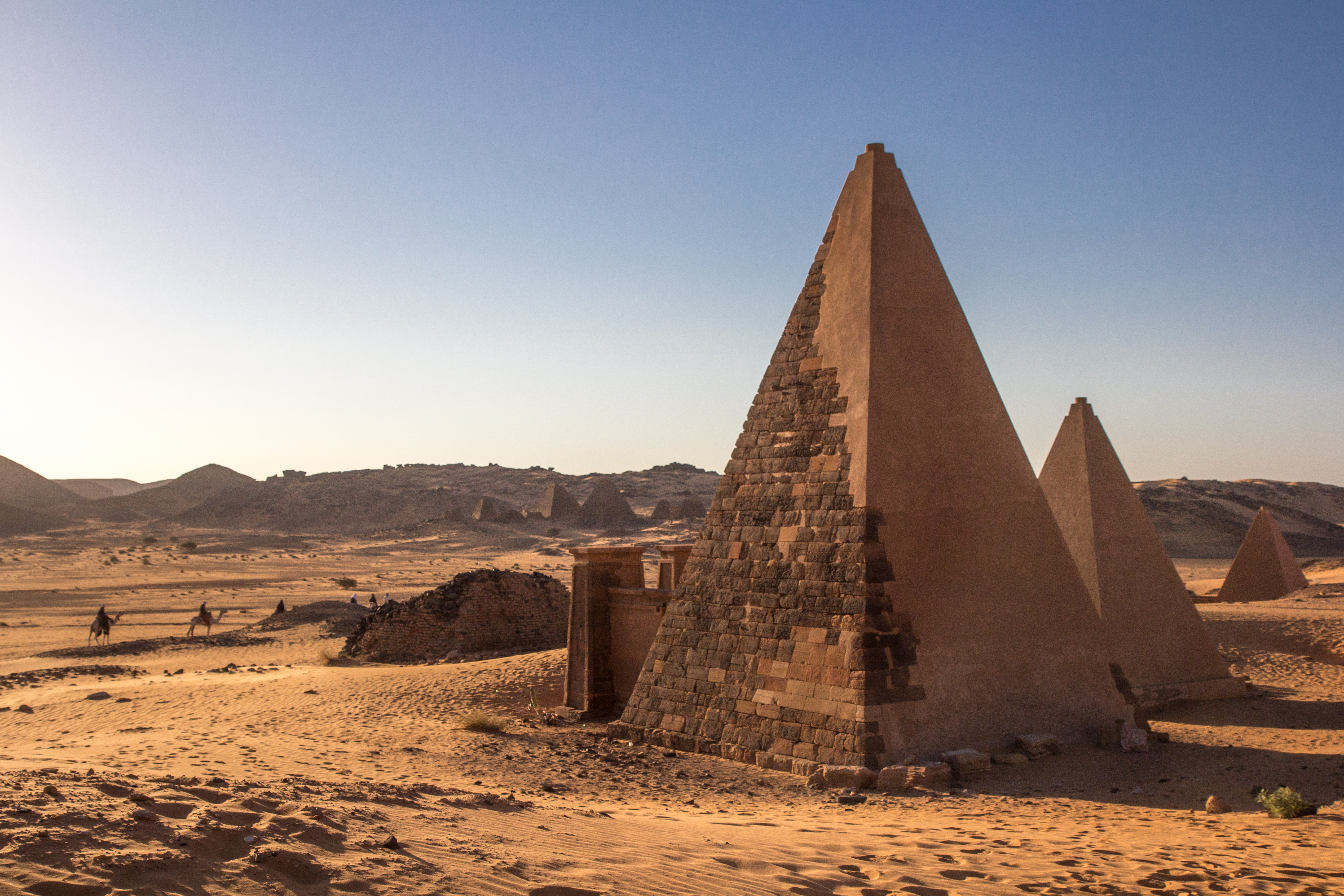
Resumption of deadly political unrest has Egypt looking like a no-go zone again and Algeria has ongoing issues beyond what the mainstream media focus on, but one major cruise line is returning to Tunisia.

For awhile, it seemed as if things were looking up for travel to Egypt. The political winds of the Arab Spring had swept longtime dictator Hosni Mubarak from power and most Egyptians seemed happy about their prospects for the future.

Tahrir Square was no longer the scene of daily demonstrations and clashes with police and counter-protestors. Tours of historic sites in and around Cairo and Nile River cruises, cancelled during the troubles, were resuming. It was all looking good.

For awhile.

The conflict between the Islamists who back the new president, Mohammed Morsi, and secular Egyptians who fear that Morsi is trying to ram an Islamic state down their throats has erupted into daily street violence that so far refuses to die down. Dozens have been killed, well over 100 hurt.

Morsi has put a state of emergency in effect in three different Egyptian cities, none of which is Cairo, which means the unrest extends well beyond the Egyptian capital.

IBIT says: If you were thinking about making that trip to the Giza pyramids this year, you might want to think a little longer.

To the west, Algeria also looks shaky. Algerians have been protesting for the better part of three years over things like a housing shortage, high food prices, unemployment and corruption, and those issues are far from resolved.

The recent raid on a natural gas facility by radical Islamic terrorists and the bloody government counterstrike pretty much seals the deal.

Cruise ship Rotterdam of the Holland America Line

Cruise ship Rotterdam of the Holland America Line

IBIT says: You go to Algeria now at your own risk — and at the moment, the risk looks pretty high.

The news isn’t all bad, though.

The cruise line Holland America has returned making port calls in Tunisia, where the Arab Spring began two years ago.

A spokesman for Holland America Line tells IBIT that the cruise ship Rotterdam is scheduled to make three Mediterranean cruises this fall of 11, 22 or 32 days between Western Europe, Italy and the Holy Land.

Each will be making a stop at La Goulette, the port of Tunis.

Tunis is Tunisia’s capital. It’s also an ancient city whose existence predates the Roman Empire. This originally was Carthage, the land that produced Hannibal, the general who invaded Europe, led an army with elephants across the Alps and for a time, scared the Romans right out of their tunics.

When the Romans returned the favor and overran Carthage, they tried their best to destroy every trace of evidence that the Carthaginians ever existed. They didn’t quite succeed, though, and you’ll find the remnants of that glorious past in Tunis.

Plus, Tunisians are wonderfully welcoming and friendly to visitors, in the true tradition of Islam.

IBIT says: If you’ve got the time as well as the cash why not? Just monitor events closely and make sure you have travel insurance.

Morocco also remains a quiet and stable travel destination these days. However, Morocco may have some issues of its own regarding “us,” which IBIT will be exploring in the coming days.

the IBIT Travel Digest 1.27.13

The good, the bad and the bizarre in the world of travel

IMG_1605

DANCING THROUGH CUSTOMS
One of the fringe benefits of writing a travel blog is that you can make some great friends doing great work. One such friend of mine is Renee King, who publishes A View to a Thrill.

In her most recent installment, she gives us the 4-1-1 on of the US government’s trusted traveler programs that can seriously speed you through the Customs process upon your return to the United States. It’s called “Global Entry” and here’s what Renee had to say about it:

“Originally created to target frequent international travelers, the U.S. Global Entry program has been a virtual god-send for travelers who want a fast and secure way of skipping the lines altogether when re-entering the United States.”

To pick up all the details on “Global Entry,” check out Renee’s article here. And then bookmark it. You’ll want to keep this one handy.

Anyone who doesn’t “get” the importance of this program has never walked/stumbled/staggered off a jumbo jet with about 300 other exhausted souls after a transoceanic flight lasting 12 hours or longer, only to queue up in a Customs line…with the passengers of two, three or four other jumbo jets, all doing the same thing you are.

I have. I don’t recommend it.

If such a trip is a one-in-a-lifetime deal for you, then you may not need this program, especially when it costs $100. You’ll also have to make an appointment to be interviewed, electronically fingerprinted and see if you qualify for the program — and frankly, not everyone will.

But when you walk off that plane in a jet-lagged fog and breeze by all those folks suffering in line, you’ll swear it was the best time and money you ever spent on travel.

And if you make more than, say, three or four globe-girdling flights per year, you need this.

To apply for the Global Entry program, start here.

ALL ABOARD…THE NIGHT TRAIN
If it’s true that, in the words of the old Amtrak commercial, “there’s something about a train, then there’s something even more captivating about an overnight “sleeper” train.

Watching the sun set from the privacy of your own compartment, then bedding down for the night with a window full of stars and awaking the next morning in a different city — or a different country — is unforgettable.

It’s also practical. A sleeper train combines transportation and lodging in one. Instead of losing a day traveling between points, you arrive at your destination early the next morning.

It’s not cheap, but a private compartment often includes all your on-board meals, as well as other perks unavailable to Coach passengers, all of which makes the sleeper experience worth considering.

London’s Daily Telegraph newspaper has considered it at length, and compiled a slideshow of what they consider to be the top ten overnight sleeper train runs in Europe, including one between Europe (London) and Africa (Marrakech, Morocco).

Paris-Barcelona? Paris-Berlin? London-Penzance? Yeah, I could happily do any of those.

-0-

AFRICAN FASHION MADE EASY
Not many folks on this side of the Atlantic are aware of it, but Africa has developed quite the fashion scene. We’re talking high-end threads for men and women from high-profile designers from the length and breadth of the Mother Continent.

Until a few years ago, your best shot at checking out this vibrant and growing fashion world was to fly to one or more of perhaps seven African cities:

  • Lagos, Nigeria
  • Nairobi, Kenya
  • Cape Town, South Africa
  • Johannesburg, South Africa
  • Dakar, Senegal
  • Luanda, Angola

And if you want to get a feel for the sources of inspiration that drive these African fashions, that still might be the best idea.

However, you do have alternatives. Lots of them, in fact.

New York City, Los Angeles and Dallas both annually hosts African Fashion Weeks. But if you feel like giving your fashion trip some international flavor — with a bit less expense and a lot less flight time — there’s the Black Fashion Week in Paris and the Africa Fashion Week London, now in its third year.

-0-

And now, here’s The Digest:

AIR
from Business Insider via Yahoo
A Germany-based air safety monitoring group lists the world’s ten most dangerous airlines over the last 30 years. Read with some large grains of salt.

from eTurbo News
An Indonesian airline adopts new Sukhoi Superjet 100 airliners from Russia. The reason: They can operate from the country’s short runways.

from NBC News
Southwest Airlines is betting that you’ll be willing to pay $40 extra to board their planes early. Would you?

from eTurbo News
Ethiopian Airlines cuts flights from Addis Ababa to Europe.

LAND

from Travel Weekly
A heavy late-December snowfall has the skiing looking good at America’s ski resorts.

from The Telegraph (London UK)
What do you get when you take an Amtrak train between Toronto and New York? A 12-hour rail cruise through US history and some of North America’s most gorgeous scenery.

from Forbes via Yahoo
Can you measure a country’s happiness? The Legatum Institute of London says it can, and it’s produced a list of the world’s ten happiest nations. And no, the United States is nowhere in the top ten.

from Time
Has snowboarding lost its mojo?

SEA
from Cruise Industry News
More evidence of the cruise industry’s growing tilt toward Asia: Princess Cruises to homeport a second cruise ship, the Diamond Princess, in Japan.

from Cruise Critic
For those of you dying to escape the frigid winter, there are six cruise ships sailing in warm waters that nearly always have cabins offered at a discount.

from Cruise Industry News
The upscale cruise line Silversea plans to offer shorter (and thus cheaper) cruises in Northern Europe and the Mediterranean.

from Cruise Industry News
As cruises go, this one’s the ultimate icebreaker. Hapag-Lloyd Cruises is planning an August cruise of the Northwest Passage fron Greenland to Alaska on one of its expedition ships, the Hanseatic. You don’t often see the words “expedition” and “5-star” in the same sentence.

-0-

AFRICA
from Reuters
You might want to hold off on that Cairo vacation a little longer. Things are getting hectic — and deadly — again in Egypt.

from al Jazeera
Museum in Mali trying to protect some of the country’s historic artifacts from the threat of destruction by radical Muslim insurgents.

from eTurbo News
British Airways pulls out of Tanzania, and Emirates is the first airline to step into the void.

from The Telegraph (London UK)
Tourism officials in Egypt report that foreign visits are up, but not as much as expected.

from eTurbo News
Ethiopia turning to China, India and Russia as potential new tourism markets.

AMERICAS
from the Huffington Post
George Hobica says Albuquerque NM has been overshadowed by Santa Fe, but it deserves a closer look. Especially if you’re a fan of beer, road trips and under-the-radar cool.

from Travel Weekly
Want a shot at some warm winter weather and a whiff of that new hotel smell? Start saving your coins and circle Dec. 2014 on your calendar. That’s the the 1,000-room $1 billion Baha Mar casino resort is set to open its doors.

from the Chicago Tribune
If you’re a baseball junkie, a visit to Chicago’s historic Wrigley Field is something close to a religious pilgrimage. Now, the Sheraton hotel chain is planning to put up a boutique hotel directly across the street from the old ballpark. Think they’ll pt bleachers on the roof?

from Reuters via NBCNews
More flights and a weaker dollar have combined to create record-setting tourism in Hawaii.

ASIA/PACIFIC
from BootsnAll
Southeast Asia is a great destination for rail travel.

from China Daily
The dispute between China and Japan over the Senkaku (or if you’re Chinese, Diaoyu) Islands is throwing cold water on tourism between the two countries.

from SFGate.com
Walking in the path of samurai. Scenic medieval walkways in Japan.

from The Guardian (London UK)
What would you see on a 40-mile walk across a city of 30 million souls? Marcel Theroux gives us his answers from his trek across Tokyo, the first of a series of walks across the largest cities on Earth.

EUROPE
from ABC News via Yahoo
Welcome to County Kerry in southwest Ireland, where drunk driving is legal. And no, that’s not a typo.

from eTurbo News
Ukraine’s largest airline, AeroSvit, goes belly up, stranding hundreds of passengers in the process.

from The Guardian (London UK)
It wasn’t that long ago that the term “luxury hostel” might have been the ultimate oxymoron in travel especially in Europe. It’s fair to say that things have changed. A lot. SLIDESHOW

the IBIT Travel Digest 1.6.13

The good, the bad and the bizarre in the world of travel

Bay Bridge bike path

Welcome to the first IBIT Travel Digest of 2013. Let’s get going.

SAN FRANCISCO: BAY HEATING UP?
The folks at Smarter Travel have listed San Francisco as one of the travel destinations to watch in 2013.

That might sound a bit like saying the sky is blue and water is wet, since San Francisco has always been a hot travel destination. But the city that calls itself “The City” has some new attractions going on line this year, and it’s all about the bay that gives the city its name.

This year, the Aquarium of the Bay is putting in an exhibit devoted to the rare river otter — one of which recently turned up, almost as if on cue, in the ruins of the old Sutro Baths, to the delight of sightseers and the puzzlement of scientists.

The Exploratorium, which has delighted generations of visitors with its science exhibits, also is getting a new and greatly expanded headquarters this year along the city’s waterfront.

But the main event will be the opening of the sleek new east span of the San Francisco-Oakland Bay Bridge, replacing the old span damaged by the 1989 Loma Prieta earthquake.

Not only is the new bridge gorgeous and designed to hold up better in an earthquake, but it incorporates something that cyclists have dreamed about for decades — a separate bike/pedestrian path. The illustration above shows you how it will look once it’s in service.

People will be able to ride or walk from Oakland to Treasure Island, the halfway point of the bridge, something that was never possible before.

Plans/discussions/arguments are underway to add a similar deck to the original west span of the bridge.

I can’t wait for the chance to take my bike up to the Bay Area and join my cycling friends, old and new, for a spin over the bay — even if it’s only to Treasure Island. Half a bay is better than none.

-0-

GO SMALL, LEAVE HOME
You already know about the cruise ship industry’s building boom, but it’s not just the big lines building big ships. Less well-known outfits also are turning out new, smaller vessels. One example is Alaskan Dream Cruises, which currently operates three small ships for Alaskan cruises.

How small is small? ADC’s three vessels hold a combined total of 162 passengers. Your typical Carnival or Royal Caribbean cruise ship may hold close to ten times that many — on one deck.

When you board a typical cruise ship, holding anywhere from 2,000 to 5,400 passengers, you may feel as if you brought half of your hometown with you. Not so on a small cruiser. It’s a completely different experience. Faster. Smoother. More intimate.

The super-small cruise ships can easily get into scenic inlets and bays, even explore small rivers, where the floating behemoths would surely run aground. Once ashore, you get more time to sightsee, because your small cruise vessel can dock at much smaller harbors. The mega-ships have to shuttle you back and forth on tenders, which really eats into your limited time in port.

Being smaller, such cruises are seldom cheap. But the experience can more than make up for the price.

AMERICAN + USAIR = ?
With each passing day, a merger between American Airlines and US Airways looks like a done deal.

Even before American filed for Chapter 11 bankruptcy protection last year, industry analysts have been expecting the airline to be snapped up by one of its financially healthier rivals. When Delta dropped out of the fray and United opted to buy Continental instead, that pretty much left the field open to USAir.

And as we move into the new year, the wheels are already turning.

Last month, American’s pilots approved a new contract, the last of the airline’s three labor unions to get on board. Having all three unions signed means that American can now come out from under Chapter 11.

The other shoe dropped just last week, when USAir pilots gave their blessing to a proposal by their American Airlines counterparts on how the two groups would handle a merger.

-0-

DRAMA BUILDING ON THE BLUE NILE
Ethiopia kept its plans for the Grand Ethiopian Renaissance Dam so quiet that they first were labelled “Project X.” But when you’re planning the largest dam in Africa on one of the world’s most disputed rivers, that’s a hard elephant to hide.

When finished in 2015, the reservoir it creates on the Blue Nile River will be double the size of Lake Tana, the largest lake in Ethiopia — and the source of the Blue Nile itself.

Issat Falls, Lake Tana, Ethiopia

Issat Falls on Ethiopia’s Lake Tana, source of the Blue Nile. © Cdkeyser | Dreamstime.com


Simply put, the GERD is Hoover Dam on steroids. It will surely become an enormous tourist attraction, and the electricity it generates could transform Ethiopia.

But mega-dams often do major, unforeseen damage to the environment, and Ethiopia shares the Blue Nile with Egypt and Sudan. Both countries already are unhappy about this dam.

Make that very unhappy.

People a lot smarter than me have been saying the next great global conflict will be over water, and observers in East Africa are already sounding alarms over this project.

IBIT says: Expect drama.

-0-

And now, here’s The Digest:

AIR
from Travel Weekly
Could this be the Next Big Thing in airline add-on fees? Bundled fares.

from the New York Times
New screening procedures from the TSA are letting some travelers actually leave their shoes on when going through security. The key word there, of course, is some.

from the Los Angeles Times
Save on airfares to Europe? Think off-season and outside the proverbial box.

from NBC News
Forget the Six Million-Dollar Man. Tom Stuker is the One Million Frequent-Flier Mile Man. And that’s how you get a jumbo jet named after you.

LAND
from the New York Times
How to get the most out of TripAdvisor.

from National Geographic
Ice hotels. If you’re not “cool” after spending a night in one of these places, see your doctor.

from Smarter Travel
For a lot of women, wearing stiletto heels while traveling may be impractical. In Greece, it’s also illegal. One of 11 weird laws around the world that can trip up the unwary traveler. SLIDESHOW

from CNN Travel
Ten cars for every type of traveler.

SEA
from Gadling
Ways to save on your next cruise.

-0-

AFRICA
from Mashable
Take a good look, world. Here they come: A smartphone and a tablet computer, designed by an African, built by Africans. Hitting the market now. This could be IBIT’s future travel gear…and maybe yours, too?

from informAfrica
Forget “The Lion King.” The leopard — not the lion — is the real “king of the jungle.”

from the Washington Post
Not all of Africa’s fascinating sights are of wilderness and wildlife. A look at urban Tanzania and Ethiopia. SLIDESHOW

from Africa Review
Mali’s Islamic extremist insurgency threatens the country’s deep musical traditions.

from The New Vision (Uganda) via allAfrica.com
Bill Gates loves Uganda?

AMERICAS
from the Wall Street Journal
New York City is still America’s biggest tourist draw. Who says so? A crowing Mayor Bloomberg — and a record 52 million visitors in 2012.

from the Los Angeles Times
The many and varied joys of a stay in Santa Barbara. A guide to its sights, sounds and tastes.

from NBC News
The US State Department issues a new travel advisory on Haiti: “No one is safe.”

ASIA/PACIFIC
from the Washington Post
Would you build an entire city around an airport? The place is called Songdo, and if this experiment works, it could change the way the world travels.

from France 24
Not content with making knockoff purses, pirated movies and even fake Apple stores, the Chinese may be counterfeiting a set of skyscrapers.

from CNN Travel
China prepares to open the doors to the world’s largest building.

EUROPE
from The Guardian (London UK)
Twenty bargain vacation options across Europe.

from Associated Press via USA Today
If you’re planning to visit Vatican City anytime soon, bring your prayers but leave your plastic. The Vatican has gone cash-only.

from the New York Times
Berlin. It’s not just about currywurst and beer anymore. The city’s better restaurants are racking up Michelin stars. Ich bin ein foodie?

from CNN Travel
QUESTION: How do you get the world’s largest airliner through a small French village? ANSWER: Very carefully.

Edited by P.A.Rice

the IBIT Travel Digest 11.25.12

The good, the bad and the bizarre from the world’s best travel media

Strasbourg Christmas lights stand

Shopping for Christmas lights, Strasbourg, France | @copy;IBIT/G. Gross

-0-

UNEASY MIDEAST
The so-called “Arab Spring” may have brought political change to North Africa and the Middle East, but it’s bringing little good cheer to the travel industry. The ongoing turmoil in that part of the world continues to make it — justly or unjustly — a no-go zone in the eyes of many travelers.

Travel Weekly reports that between now and next April, Norwegian Cruise Line is dropping Egypt from its 10- and 11-day cruises, scheduling port calls in Istanbul, Crete and Naples in its place.

And NCL came to that decision before Egypt’s new president got involved in brokering a ceasefire between Israel and Hamas in Gaza and then tangled with his own nation’s judiciary over sweeping new powers he claimed…for himself.

Bottom line: Many of the countries now being avoided by travelers and travel companies alike may be perfectly safe to visit, but it may be a good while yet before the traveling public perceives them that way.

-0-

AMTRAK RIDING HIGH
Anyone who tells you Americans don’t take trains hasn’t been to a train station lately. IBIT has and I can tell you, they’re busy.

Amtrak’s business year officially closed out on Sept. 30, and it closed on all high notes, starting with this one: 31.2 million passengers for fiscal 2012.

Two things make that number important. First, it’s the highest ridership for Amtrak since it came into being in 1971. Second, it’s the ninth year in a row that Amtrak has set a new ridership mark.

While you’re at it, smoke this over: Between 2000 and 2012, Amtrak ridership has risen by 49 percent.

You’ll find the rest of Amtrak’s glowing figures in the corporation’s press release here.

A lot of airline CEOs would kill for numbers like these. Then again, the misery that is present-day air travel in the United States is a big reason why more people are turning to trains in the first place.

-0-

AND FINALLY
You know those customer-satisfaction surveys by J.D. Power & Associates, the ones that companies always tout in TV commercials to show how wonderful they are? Here’s one you won’t be seeing anytime soon, from anybody.

With hotel business picking up, J.D. Power decided to survey hotel guests. Those guests put the hotel industry on blast. Low-end, high-end, no one was spared:

“Satisfaction with check-in/check-out; food and beverage; hotel services; and hotel facilities are at new lows since the 2006 study and satisfaction with guest room has declined within one point of its lowest level in the past seven years.”

If I’m that guy at Motel 6 and I hear that, I’m leaving the light on because I can’t sleep. How did this happen?

Here’s a clue, courtesy of Travel Weekly’s Arnie Weissmann: Most of the top hotels in the country aren’t owned by real “hotel people” anymore.

They’re owned by private equity companies, which specialize in boosting profits by cutting costs — mainly by cutting staff and lowering service levels — before selling off the business to someone else.

That may be necessary when you’ve got hotels full of empty rooms at the height of a recession, but to keep doing it after your customers start coming back? Not smart, as J.D. Power vice-president Stuart Greif gently points out:

“Hoteliers need to get back to the fundamentals and improve the overall guest experience. Charging guests more and providing less is not a winning combination.”

-0-

And now, here’s The Digest:

AIR
from Travel Weekly
Qatar Airways joins oneworld, the world’s number two airline alliance. QA joins Malaysia Airlines and SriLankan Airlines as members-elect. It’s a big deal for Asian air travel and a big boost for oneworld, but the announcement is overshadowed by the ongoing beef between American Airines and its pilots.

from Travel Weekly
The Middle East may still be too hot politically for some travelers, but that’s not stopping three major Persian Gulf airlines from building alliances with European carriers.

from Travel Weekly
Southwest Airlines will start flying this spring from Florida to Puerto Rico. Officially, it’s a simple takeover of existing service from AirTran, which Southwest bought. But as its first air service outside the continental United States, it’s a big step.

LAND
from the Pittsburgh Post-Gazette
Pickpockets in Spain, gypsy cabs in Rome and other avoidadable travel scams.

from Travel Weekly
JW Marriott opens the world’s tallest hotel in Dubai. How tall? About eight stories shorter than the Empire State Building in New York. Yep, that’s tall, all right.

from Independent Traveler.com
Lots of folks have tips on how best to travel with kids — but what about traveling with grandkids?

from NBC News
Honeymoons…with friends? Really? Yes, really.

SEA
from Cruise Critic
Cruising for grown-ups. Seven options for sailing without the kids.

from Travel Weekly
Norwegian Cruise Line is going all Grinch on Hawai’i. Seeing strong demand for its Hawaiian cruises, NCL is raising its Hawai’i cruise prices 10 percent starting Jan 1, 2013. Merry Christmas…

from Gadling
Travel insurance is one purchase a lot of cruise travelers try to do without. Don’t. But have a clear understanding of what travel insurance will and won’t do for you.

-0-

AFRICA
from the Ethiopian Press Agency via allAfrica.com
Addis Ababa starting to become a destination for conference travel.

from The Herald (Zimbabwe) via allAfrica.com
The justly famed Victoria Falls are starting to get some serious competition as a tourist attraction from the Mana Pools. Chinese tourists in particular just love this spot.

from allAfrica.com
Citizen of Vietnam caught in Mozambique with a half-dozen rhino horns in his possession. Wonder how to say “You in a heap ‘a trouble, boy!” in Vietnamese?

from Inform Africa
An African looks at our Thanksgiving tradition, and wonders why African-Americans find anything to celebrate.

AMERICAS
from Travel Weekly
If you’re used to paying $51 in airport fees when flying into and out of Antigua, get ready to go a little deeper into your wallet from now on.

from the Los Angeles Times
The Hotel Chimayo de Santa Fe in Santa Fe, NM walks a fine line between respecting an impoverished local culture and providing a successful escape for its visitors.

from USA Today
If you’ve been frightened away from Mexico over the last several years, you can at least think about returning now. The most recent State Department travelers warning about Mexico exempts most of that country’s traditional tourist destinations.

ASIA/PACIFIC
from the New York Times
Kuala Lumpur, Malaysia’s capital city, is obsessed with good food. For a traveler, that could be a very good thing, indeed.

from the New York Times
A short but worthwhile visit in the city we used to know as Calcutta. Nowadays, it goes by Kolkata.

from The Guardian (London UK)
With a sleek new mountain eco-resort not far from Shanghai in Zhejiang province, China hopes to lure environmentally conscious tourists — and perhaps simultaneously clean up its international image as one of the world’s major polluters.

from France 24
Are the people of Singapore real-world Vulcans a la Star Trek, utterly lacking in emotions (as well as pointy ears)? A US Gallup poll says yes. Even worse, a fair number of Singaporeans seem to agree. It seems they’re too busy making a living to have a life.

EUROPE
from The Guardian (London UK)
A look at the town of Vicenza, one of northern Italy’s under-appreciated jewels, and the creation of one of its most famous architects. A UN World Heritage Site that still manages to slip below the tourist radar.

Edited by P.A.Rice

The IBIT Travel Digest 10-22-12

The good, the bad and the bizarre from the world’s best travel media

James Bond Island, Thailand

© Ihar Balaikin | Dreamstime.com

The latest James Bond movie, “Skyfall,” is now blowing up (almost literally) in theaters worldwide. 007 has been a lot of places for Queen and country these past 50 years — which locations were your favorites? London’s The Guardian offers up a slideshow of their must-sees. Does their list match yours?

The one that really set my imagination racing was Khow-Ping-Kan on Phang Nga Bay in Thailand, seen above. This was the climactic location for “The Man with the Golden Gun,” one of the lesser flicks in the Bond series. These days, a lot of people just call it “James Bond Island.”

A sight like this could make me happily forget all about Bangkok, at least for a day or two.

-0-

In its ongoing efforts to swallow the Earth whole, Google has bought up the Frommer’s travel brands — all of them — for an undisclosed price. This after buying the Zagat restaurant review publishers.

What all that means for the traveling consumer remains somewhat unclear. It’s unlikely that what you see online or on book shelves from these two well-known travel publishing names will look or feel any different in the near term. But as we all know, things change.

Will Google insist on putting its stamp on its new travel possessions, or will it be content not to fix what wasn’t broken? Stay tuned.

-0-

IBIT doesn’t offer a Travel Outrage of the Week feature. If it did, this might top the list.

There are reports out of San Francisco that the local Travelodge motel recently refused the credit cards of famed New Orleans funk band The Meters Experience on the grounds that they are black.

And no, that’s not a misprint, nor did you misread it.

You can read the entire story yourself at SFWeekly here. For a more detailed report on the incident, go to the NOLA.com story here.

It really shouldn’t make any difference, but it’s not as if we’re talking here about some garage band composed of a bunch of high school kids with delusions of grandeur. The Meters are a New Orleans institution known around the world. Its guitarist, Leo Nocentelli, is a nominee for the 2013 class of the Rock ‘n’ Roll Hall of Fame.

I have emailed the Wyndham Hotel Group, which owns the Travelodge chain, asking it for clarification and its side of the story. Whatever I get in response will be published here.

There’s no indication that the motel clerk or manager even tried to verify whether the credit cards were valid, a swift and simple process that hotels and motels conduct routinely with all hotel and motel arriving guests millions of times a day around the world. Instead, if the initial reports are correct, the Travelodge people took one look at these black musicians and said, “Forget about it!”

Why are we still having to deal with this kind of treatment in 2012?

ADDENDUM
I emailed Christine DaSilva, a spokeswoman for Wyndham Hotel Group, about this situation. Here’s a portion of what she had to say:

“Hi Greg,
Thanks for checking in with me – not everyone that’s written about this allegation has done that, and it’s greatly appreciated.

As you can imagine, we are deeply troubled by this allegation. We invite every individual regardless of ethnicity, culture, gender, sexual orientation or generation to experience our products and services, and we are troubled that the guests’ experience didn’t reflect our values.

“Please rest assured that we have been looking into this situation and are handling it directly with the franchised property’s owner as well as the guests.”

Sounds like Wyndham’s on the case. I suspect that a certain Travelodge property manager in San Francisco is going to be put in check…bigtime. And that’s exactly as it should be.

And now, here’s the rest of The Digest:

AIR
from ABC News
This is the sorry state to which US airport security has sunk: A list of the 20 airports in this country where a TSA inspector is most likely to steal something out your luggage. It sounds like the punchline of a bad joke, but it isn’t. The joke’s on us.

from SmarterTravel
Seven simple ways to get yourself kicked off an airplane. SLIDESHOW

from Travel+Leisure
If you’re flying out of any of these ten US airports, you’d be well-advised to a) get there early and b) not schedule your connecting flight too tightly. These Tardy Ten are notorious for flight delays.

LAND
from Travel Weekly
According to the numbers the US Travel Association fished out of the US Labor Department, travel has become a major source of new jobs in America. Guess you can’t outsource Disneyworld, can you? It’s also a growing source of cash. Foreign visitors dropped $82 billion in the US in the first half of 2012, an 11-percent increase over last year. So when you see that foreign tourist in your town, be nice. Be very nice.

from the New York Times
In Manhattan, home to some of the priciest hotels on Earth, a decent room for $150 or so a night constitutes a good deal. This guy tells you where and how to find seven of them.

from Travel Weekly
Which would you rather pay for at your hotel — your breakfast, access to the hotel gym or your in-room Internet access? US hotels are making the choice for you.

from Travel Weekly
At the San Francisco Airport Marriott Hotel, they really give a hoot. Lots of hoots, in fact. Nesting barn owls, it seems, love the place.

SEA
from Travel Weekly
Here’s an idea from Carnival Cruise Lines. Want to get your cabin early, have priority dinner seating aboard ship, be first in line to embark or debark? Easy. Just pay an extra $49.95 per cabin. And you thought the cruise industry wasn’t paying attention to the airlines and their add-on fees.

from Travel Weekly
Bermuda is starting to fall off the cruise ship industry’s radar. Royal Caribbean is the latest to cut back.

-0-

AFRICA
from Travel Weekly
Egypt reopens a major stretch of the Nile River to cruise ships.

from Wilkinsons World
Sitting off the coast of Namibia, Shark Island today is a wildlife preserve and resort. But a century ago, it served a very different purpose. Long before the Nazis came into being, the Germans created the world’s first death camp on this island…to exterminate Africans.

AMERICAS
from Travel Weekly
Go to Mexico, get well? Mexican tourism officials are pushing the nation’s capital, Mexico City, as a medical tourism destination. Meanwhile, they’re also looking at giving small groups of visitors exclusive access to historic sites like Chichen Itza — for a fee, of course. Ever dreamed of having a pyramid all to yourself?

from the New York Times
In Portland, OR, the gritty old industrial area on the east side of Willamette River is going upscale. Check it out while it’s still both fun and relatively affordable. SLIDESHOW

from the Los Angeles Times
Before it was America’s 50th state, Hawaii was a sovereign state, an independent kingdom with its own royalty. The LAT’s Catherine Hamm shows you where to go to dive into the Hawaiian history your mainland teachers left out of their lessons.

ASIA
from Travel Weekly
Europe isn’t the only part of the world where river cruising is taking off. Aqua Expeditions, which operates Amazon River cruises in South America, has its sights fixed on the Mekong River in Southeast Asia.

from the Los Angeles Times
A generation ago, Da Nang was known to the world mainly as a gigantic US Marine base during the Vietnam war. Today, it’s Surf City East.

EUROPE
from Travel Weekly
The competition for the European river cruise market is heating up. After watching the Viking line add fresh new ships left and right, Uniworld is firing back with plans for two new ships of its own.

from the New York Times
The Belgian city of Antwerp, which first gained wealth and power as a 16th-century port city, is undergoing a revival.

from the New York Times
Wine lovers know all about Spain’s Rioja region, and for good reason. But there’s a lot more to Rioja than just great wines. There’s great food to go with them.

Edited by P.A.Rice

EGYPT: Safe for tourism?

The kidnapping last Friday of two black Boston-area visitors touring the Sinai peninsula is but the latest in a string of abductions targeting Americans in that Egyptian territory in 2012. It raises questions about how safe the country really is for international travelers.

Two African-Americans from the Boston area, the Rev. Michael Louis and Lisa Alphonse, have been abducted from a tour bus in Egypt by a Bedouin tribesman who wants to swap them for his imprisoned uncle. He also kidnapped the group’s Egyptian guide to act as translator.

Rev. Louis is 61, Ms. Alphonse 39. According to the minister’s son, they were among a group of Boston-area tourists on a missionary trip to Israel who set out to visit St. Catherine’s Monastery in the Sinai, one of the oldest working Christian monasteries in the world and a UNESCO World Heritage Site.

The son, Jean Louis, also says his father is diabetic and may soon need medication.

The kidnapper has identified himself as Jirmy Abu-Masuh, 32. He claims his 62-year-old uncle was imprisoned because he refused to pay a $100 bribe to police while traveling to the Egyptian city of Alexandria. He claims his uncle also is a diabetic and has not been receiving medical treatment in prison.

Abu-Masuh has told reporters the two kidnap victims are being well treated, but threatened to kill them both if authorities try to arrest him. He’s also threatened to kidnap more tourists from other nationalities.

To read details about this story as reported in London’s Sunday Mail, click here.

I don’t know if Rev. Louis and Ms. Alphonse were the only black Americans on the bus, or even the only Americans, so I can’t say at this point they were singled out either for their race or their nationality.

But media reports from the region have been pretty consistent in saying that this abduction is not an isolated case. This from the Sunday Mail article:

“Friday’s abduction is the latest in a series of kidnappings Egypt’s Sinai Peninsula over the past year.

“Abducted tourists are rarely harmed and usually released within days. In February, the AP interviewed two American women from California who say their Bedouin kidnappers gave them tea and dried fruit, and talked about religion and tribal rights. They were allowed to bring their Egyptian tour guide with them.”

That latter point gives reason for hope that the hostages eventually will be freed unharmed. As disturbing as the kidnappings themselves, however, is that they appear to be part of a trend.

Counting the Rev. Louis and Ms. Alphonse, a half-dozen American tourists have been kidnapped so far this year in the Sinai, a sprawling, arrowhead-shaped desert peninsula of roughly 23,000 square miles and a population of less than a half-million people, of whom about 80,000 may be Bedouins (the rest being ethnic Egyptians and Palestinians).

Even before the fall last year of Egyptian dictator Hosni Mubarak, government control over the region was spotty at best, and parts of it have become a haven for drug-smuggling, prostitution rings and other forms of organized crime. Add to that a longstanding grievance against corrupt police by the Sinai Bedouins, and you have a potentially volatile mix.

Coupled with ongoing political tensions in Egypt proper, this might give some travelers pause about visiting the land of the pyramids, which doesn’t help the hundreds of thousands of Egyptians whose livelihoods depend on tourism.

Does this mean I cross Egypt off my bucket list altogether? Not necessarily, though I’d probably be inclined to wait until more of the political dust settles before booking a trip to Cairo.

On the other hand, I won’t be trekking across the Sinai anytime soon.

Edited by P.A.Rice

EXCLUSIVE: Pauline Frommer

Pauline Frommer recently sat down with IBIT in Long Beach for an exclusive, brief but wide-ranging interview. Her father, the famed Arthur Frommer, will be at the Los Angeles Times Travel Show this weekend:

Q. With this being an Olympic year in London, would this be a good year to bypass Western Europe altogether?
A. No, absolutely not. Europe has positives and negatives in terms of its affordability.

The positives are that a lot of it’s in crisis. As you probably know, the debt of a lot of Europe was just downgraded by Standard & Poor, which is going to make it much harder for them to borrow and will really hurt their business travel. So you go to cities like Barcelona, Madrid, Athens and other parts of the so-called PIGS nations, which are Portugal, Ireland, Greece and Spain — the ones that have the most severe crises — and you can stay much less expensively in these recently expensive businessmen hotels than you could before. So there are good deals to be had because of Europe’s financial crises.

There are also, unfortunately, more expenses. Because Europe has just imposed a carbon tax on airfares, airfare to Europe is about to get more expensive. And there also are a lot of little local taxes where governments in desperate need of money are adding on that can badly impact the traveler, so it’s a mixed picture.

To give one example, I was in Northern Ireland this summer and in Ireland, and it was much less expensive than it was five years ago because of their deep recession. Food was less expensive, lodging was less expensive. Overall, it was a cheaper vacation. So I say don’t write off Europe, just do it in a savvy way.

Prague is as expensive as any Western European city because it’s Prague and it’s so, so popular. However, if you go out into Bohemia, if you go into the little towns that make up the Czech Republic, prices drop in half. You’re greeted with open arms. They’re glad to see you because they don’t get that many tourists. And these are often well-preserved medieval enclaves that simply don’t get the tourism they deserve.

Q. What about Turkey?
A. Turkey has seen a hug uptick in the amount of its tourism in the last year, mostly because of (the) Arab Spring. People who used to go to Egypt are going to Turkey. But Turkey can be done affordably and it’s an incredible place to go, with wonderful food, welcoming people.

The only danger is that you’re going to buy a rug. Even if you didn’t expect to buy a rug, you’re going to buy a rug. It’s nearly impossible not to. We have a Turkish rug, which I deeply regret…but it was fun buying it.

Q. Do you ever have trouble getting Americans to grasp the idea that Turkey is actually a part of Europe?

A. Yes. Actually, it’s on the border. It’s half–European and half–Arab. It’s always been the gateway between those two cultures. The culture there is so rich and vibrant. They want to be more a part of Europe.

My daughter goes to a day camp in New York City and one of her best friends there is a Turkish girl whose mother brings her to the US every summer because she was born in the US and she wants to make sure she speaks English. According to this woman, the fundamentalists are taking over in Turkey in terms of who’s getting elected to local governments and the larger government, and she’s very, very worried that Turkey’s taking more of a hard line away from Europe more toward fundamentalist Islamic culture. But that doesn’t mean it won’t be welcoming or wonderful for Americans to go to.

Q. Egypt was one of the first countries caught up in the Arab Spring. Is it now a viable tourist destination again?

A. Egypt is a tough one. Egypt, as we all know, had this extraordinary uprising, where a terrible dictator was finally removed. Unfortunately, it looks like it might’ve been a soft coup by the military and you are having major disruptions and violent occurrences in Tahrir Square, and unfortunately, Tahrir Square is right near the Khan-al Khalili bazaar, right near the Egyptian Museum…it’s the area that tourists are lodged in and go to. On a personal level, I would not go right now. I just think the safety situation is not stable enough. It’s a tinderbox, unfortunately. And it’s a tragedy because one in 10 Egyptians works in the tourist industry. Without that income, the society is going to be destabilized even further.

And it’s a place where you should go, because it’s an extraordinary country to see, the cradle of civilization. But right now, I would not feel uncomfortable recommending that people go.

Q. Are there any destinations in that part of the world you feel comfortable recommending?

A. Israel is amazing. People don’t think of it as being a bucket-list destination, but it should be. To see the places where Mohammad built his mosque, where Jesus walked his last steps, where for centuries Jews have prayed at the Wailing Wall. As a destination, it tells you more about what it means to be a human being than most other places in the world. Just the issues that they’re dealing with and the history there and the richness of the culture. It’s just extraordinary. You’ve got to go.

Q. China seems to be an impossibly cheap destination these days. How are they pulling that off?
A. They can offer such incredible deals because the Chinese currency is so devalued. It really is extraordinary what you get for what you pay.

Q. Panama seems to be turning up increasingly on the travel radar. Why is that?
A. Panama has been very, very smart. They have really raised their profile in the last couple of years. They have that wonderful musician who (was) their minister of tourism (Rubén Blades, 2004-09). He has become the face of Panama. And they are really competing with Costa Rica because they’re cheaper than Costa Rica but they have the same they have that the same natural wonders and they have something Costa Rica doesn’t have, which is the Panama Canal, one of the greatest engineering feats of the 20th century.

My father went and spent a week in Panama City and absolutely loved it. A lot of Americans are retiring there, too. But he thought that just in terms of value for the money, just extraordinary. And the diversity of the cultures, because you have a lots of indigenous peoples there, living in very traditional ways. And you can visit them and see that. You also have extraordinary nature sites, beaches.  I think it’s going to give Costa Rica a real run for the money, if it isn’t already. And it’s safe.

Q. Asia is really pushing hard in the international tourism market, and it looks now as if there’s a new player entering the game: Myanmar.
A. Oh yes, yes. That’s very exciting. I’ve never been because I wouldn’t. Aung San Suu Kyi said don’t come, that it would just feed this horrific regime. And I didn’t want to; I couldn’t in good conscience. But they seem to be making some really good decisions and taking some baby steps toward democracy. Yeah I really want to go, it’s supposed to be extraordinary — colonial cities beautifully preserved, these extraordinary temples, the jungles, pristine beaches, and not that many tourists. (Secretary of State) Hilary (Clinton) just went there.

Edited by P.A. Rice

PROTEST: A traveler’s view

© Tokarsky | Dreamstime.com

In an era of political unrest around the world, your travels can unexpectedly make you a witness to history. It also can make you a casualty.

Tracey Friley, an IBIT reader, a homegirl from Oakland and a terrific blogger herself (whom I hate right now because she’s in Paris!), did something dangerous today.

She asked a question on Facebook that started me thinking:

“If you saw a protest while on a trip, would you run towards it or run away?”

It’s an important question to consider, especially now and particularly if you’re traveling outside the United States.

You know about the events of the Arab Spring in places like Tunisia, Egypt, Libya, Yemen, Syria, the economy-driven street protests in Greece. You know about the Occupy Wall Street movement that has spread across America and beyond.

You also know about some of the things that have happened in those events. People have been injured, some killed.

INTERESTING TIMES
In Libya and Syria, the dead number in the thousands.

So how would I answer Tracey’s question? My answer is firm, straightforward and absolute:

It depends.

It depends on the circumstances of the moment. It depends on the culture. Most of all, it depends on you and how finely tuned is your sense of self-preservation.

We live in interesting times. Between economic turmoil and people’s political aspirations, unexpected mass protests can pop up almost anywhere at anytime.

Some folks have an uncanny ability to judge what is safe and what is not. They know how to “read” a crowd. They can sense when it’s okay to stick around and when it’s time head elsewhere.

BULLETS, RUBBER OR NOT
It’s not 100 percent, though. Even “street smarts” finely honed at home can betray you in an unfamiliar setting.

And you only have to be wrong once.

There are places in the world where the authorities’ idea of crowd control is a line of tanks and a heavy use of bullets, rubber or otherwise. Countries like Yemen and Syria come immediately to mind.

Even so, the temptation to get out there and watch from the sidelines, or even hit the streets and join in with the protesters, can be a powerful thing.

Sometimes, you can feel when history is happening before your eyes. The feeling that wells up in your soul is something akin to a tidal wave, one with the power to sweep you out onto the streets along with the locals.

But the greater the moment, the greater the potential for things to go badly sideways.

CAN YOU READ?
Think about it. Had you been on the ground at Tiananmen Square back in 1989, you might have been there to see that brave, unnamed young man singlehandly face down a column of Chinese tanks. That sight, that moment, is one that would stay with you all your life.

Then again, you also might have been among the demonstrators crushed under the treads of Chinese armor the night before, in which case you wouldn’t have seen anything the next day.

How good are you at reading moods, especially the moods of a few thousand protestors or a few hundred cops — particularly in a foreign country where you can’t speak the language or even be able to read the signs?

If you decide to go with the flow of a demonstration, your life could depend on the answer, because even in a country where you know the language and feel at home with the culture, everything about a street demonstration is volatile.

A FOREIGNER’S RIGHTS
A single act, a single voice, a single gesture, can take a peaceful protest from zero to bloody hell in a matter of seconds. If you wait until the tear gas, water cannons and rubber bullets start flying before you decide to remove yourself from the premises, you’ve probably waited too long.

If you wait until after the gunfire starts, you’ve really waited too long.

The other thing you need to consider is your legal status on the ground you’re standing on.

You are a foreigner, a visitor, a guest. And one of the first things you learn during times of unrest is that a foreigner has no rights that a host government is bound to respect.

The quickest way to develop a healthy admiration for American jurisprudence is to get yourself “caught up” in a country where there’s no such thing as presumption of innocence under the law.

Your stay “in country” could wind up being extended a lot longer than you planned, and it won’t be your idea of a good time.

So before you opt to just go with what looks like the flow of historic events, you need to remember something: When you put yourself in the path of history, stay alert and listen to your instincts, because you also may be putting yourself in Harm’s way.

And over time, you learn that Harm doesn’t swerve much.

-0-

NOTE: Tracey would like me to inform you that “i’m not from oakland. i just live there. i’m an LA girl through and through.” Duly noted, T! Bonne nuit a Paris, chere!

ALSO CHECK OUT:
In case of riot, read this
Leave the bling at home

the SUNDAY TRAVEL DIGEST

A roundup of the good, the bad and the bizarre from the world’s best travel media

fall colors

© Shawn And Sue Roberts | Dreamstime.com

A CASCADE OF COLOR
The Labor Day weekend is fast approaching, signaling the end of summer. But for those of you thinking about a trip to drink in the beauty of America’s fall foliage, it’s time to get busy planning.

We’ve all seen the spectacular photographs like the one above, acre upon acres of trees clothed in blazing hues as they prepare to shed their leaves for winter. But if you’ve never seen this natural phenomenon for yourself, you’re depriving yourself of one of nature’s simple, silent joys.

The first time I saw it was when I went back to Connecticut to visit my friend, Walt. We spent a weekend cruising through CT, Rhode Island, Massachusetts and Maine.

Have you ever seen something so intensely beautiful that it was hard for you to breathe? That’s how it was. A 24-hour sunrise and sunset, growing out of the ground.

Now, if you live in fall foliage country and have to rake or vacuum up millions of dead leaves every year as fall turns to winter, I’ll understand if you don’t share my enthusiasm for this time of year. But for the rest of us, this is something special.

If you’ve ever wondered why the leaves turn colors like that, this site gives a pretty good explanation.

You can find fall colors across much of the United States, especially in the Great Lakes area and even out west, as well as in Canada. But the region most often associated with fall foliage is New England.

You can do your own driving tours through fall foliage country. There are tons of guidebooks and Web sites devoted to the subject, and AAA can provide you with maps for your own self-guided tour.

Lots of hotels, inns and bed-and-breakfast houses offer fall foliage packages that include everything from meals to massages.

If you’d rather concentrate solely on the view — and isn’t that the whole point? — there are fall foliage bus and rail tours.

The bus will nearly always be cheaper, but being 6’3,” I gravitate toward trains. When it comes to legroom, it’s no contest.

So pack your bags, load your camera — and prepare to spend a lot of time saying “Wow!”

AIRFARE ALERT: Fall sale to Africa
IBIT reader, colleague and namesake Tracy Gross spotted this on the Web from ASAP Tickets Service — a fall sale from the eastern United States to 11 African destinations that stretch the length of the Mother Continent, from Cairo, Egypt to South Africa and Zanzibar. The sale runs through Sept. 15.

The US departure cities are New York, Boston, Philadelphia and Chicago. The African destinations are:

  • Abuja………………..$1,019
  • Accra………………..$1,049
  • Cairo………………..$ 997
  • Dar es Salaam…………$1,439
  • Entebbe………………$1,049
  • Johannesburg………….$1,069
  • Kilimanjaro…………..$1,439
  • Khartoum……………..$ 989
  • Lagos………………..$1,019
  • Nairobi………………$ 969
  • Zanzibar……………..$1,439

According to ASAP, these round-trip fares that include all taxes and fees. Those prices are so good, it almost feels as if there has to be a catch somewhere.

And there is: You can’t book any of these fares yourself online. These guys actually want you to call them up and talk to a live human being. Their phone number is (877) 335-0223.

In addition to this sale, they also say they can hook you up with flights to 30 other African cities.

You’ll find more details on the ASAP Tickets Service page here.

ASAP Tickets is an arm of the International Travel Network, headquartered in San Francisco. The Better Business Bureau gives them an “A” rating (the highest you can get is “A+”).

Maybe I should ask them what they can do for us West Coast folks who’d like to visit Africa — but who don’t own a bank.

ALLIES IN THE AIR
Waiting to take off from Terminal 5 in London’s Heathrow airport, I caught sight of a British Airways jumbo jet on taxi. Only you had to look twice to tell it was a British Airways jumbo jet. The name that covered half the fuselage was oneworld, the name of the airline alliance to which BA belongs.

That was just weird, okay? But I figured it was just a “one-off,” as our British cousins say.

Only it isn’t. Seems there are quite a few airlines doing that these days, using their own planes to tout their alliances and pushing their own identities into the background.

What’s up with this? Is the alliance tail starting to wag the airline dog? And if so, what does that mean for you and me?

You’ll find out tomorrow, right here on IBIT.


And now, here’s this week’s Digest:

-0-

AIR
from BBC Travel
A tale of two PortlandsMaine v. Oregon. The charms and attractions of each.

from USA Today
Another argument for a truly balanced transport system: The big airlines really don’t want to bother with small or isolated markets. Witness Delta’s pullback.

from msnbc
More silliness from the TSA. A black woman gets her hair searched at the airport. Her hair? Really? VIDEO

LAND
from Frommer’s
The world’s most walkable cities. See the world and get healthy at the same time. What’s not to love?

from Independent Traveler
Tips for beating brutal summer heat when you travel.

SEA
from USA Today
Costa Cruises drops Egypt and Tunisia from its 2012 itineraries due to “persistent negative perception” in the wake of political upheaval in both countries. Rgypt? Maybe? But Tunisia? Why? They’ll be switching to European destinations and Israel instead.

-0-

AFRICA
from allAfrica.com
The Zimbabwean government looks to push tourism as a way to break down barriers across cultures.

-0-

AMERICAS/CARIBBEAN
from The Guardian (London UK)
With its bloody US-fueled drug war and its own lingering homegrown insurgency pushed to the background, Colombia is making a major comeback as a travel destination. And as you’ll see in this story, its capital city of Bogotá is one of the venues leading the way.

-0-

ASIA/PACIFIC
from Lonely Planet
If you’d rather go farther afield for your fall foliage trip, consider Japan.

from Budget Travel
How about a nice 9-day vacation package to Afghanistan? There’s a Canadian travel company that will hook you up. No, I’m not kidding…and even more incredibly, neither are they.

-0-

EUROPE
from the Los Angeles Times
Florence, the Italian city that gave the world the Renaissance, is having one of its own.

the SUNDAY TRAVEL DIGEST

Ferry from Banjul to Barra

The good, the bad and the bizarre from the wold’s best travel media

GOING IN THE NO-GO ZONES
Paul Theroux has made a living going, and writing about going. Recently in the New York Times, he wrote about the idea of going where you’re not “supposed” to go.

Actually, it’s more about going to those places where the most common and immediate response when you broach the idea is “Are you crazy? Why would you go there?”

This statement is often followed by frantic insistence that it’s too far, it’s too strange, it’s too dangerous, it’s too…something.

If you’re familiar with Theroux’s body of work, you won’t be surprised if he disagrees. He makes a case for going off the beaten tourism paths, way off.

I got similar reactions from some folks when I told them I was going to the Gambia, for no real reason except that it was totally unfamiliar to them.

It turned out to be perhaps the greatest and most important trip of my life.

To read all of Theroux’s thoughts on this issue, click here.

HIT THE BOOKS
Contrary to popular opinion, not only has the digital age not rendered the library null and void, but many are actually thriving and some of the newer ones, like Seattle’s, are actually leading revivals in the downtown cores where they were built.

I personally enjoy going over to the Geisel Library on the campus of the University of California, San Diego to work — among other things, on preparing this digest. Quiet. plenty of resources, plenty of room, plenty of electric outlets for my laptop — and it’s an architectural marvel besides.

And I could probably livehappily in the Library of Congress in Washington DC, which many be the greatest repository of knowledge since the original Royal Library of Alexandria in Egypt.

The folks at USA Today has assembled a list of ten cool libraries, old and new, municipal and collegiate, that offer activities and tours. If one of them is near you, check it out.

And be sure to check out their Travel section.

And now, here’s this week’s Digest:

AIR
from the Associated Press
How old is old in airplane years? From the ordinary airline passenger to the Federal Aviation Administration, a lot of folks are pondering that question after one of southwest Airlines’ older Boeing 737s developed a 5-foot hole in its fuselage recently in mid-air, causing the plane to depressurize and forcing an emergency landing.

from the New York Times
The art of being “bumped” from a flight, and how to profit from it. See why some travelers actually look forward to it.

LAND
from The Daily Basics
The Walkin’ Desk is equal parts rolling suitcase, mobile desk and anywhere-chair.

SEA
from USA Today
With the glut of new cruise ships out there, we’ve been telling you this was going to happen: Royal Caribbean is offering last-minute deals on two of its newest luxury behemoths, Oasis of the Seas and Allure of the Seas. Watch for other cruise lines to follow suit.

from Associated Press via Yahoo!
Carnival is the latest cruise line to pull the plug on Mazatlan in the wake of reports of crime and violence there. That means more port calls for Cabo San Lucas and Manzanillo.

from USA Today
Mexico isn’t the only cruise destination having problems. Passengers landing at the new cruise ship terminal in Falmouth, Jamaica are getting bum-rushed by drug dealers and prostitutes. The facility only opened in February. Royal Caribbean is threatening to bar their passengers from going into town. Nervous local officials are scrambling to beef up security.

AFRICA
from the Calgary Sun (Canada)
The popularity of adventure tourism in the West African nation of Mali is exposing ever more Westerners to the art of Dogon woodcarving. Result: a lot of Dogon wood work is turning up in art galleries all over the Western world.

from Agence France Presse
Africa’s lions are getting some unwanted company. The latest animal on the Mother Continent to show declining numbers in the face of changes to its habitat — South African penguins.

from the Sunday Times (South Africa)
Americans may not be traveling in sizable numbers to visit northern and sub-Saharan Africa, but Russian tourists are — and the country’s tourism ministry apparently is pushing African tourism, hard. Zimbabwe, whose president, Robert Mugabe, is largely a pariah in the West, is looking toward Moscow for the same reason. Meanwhile, back in Washington DC…

AMERICAS/CARIBBEAN
from the San Francisco Chronicle
Ever thought about backpacking? Looking for a place to ease into it, but still offers the great outdoor, complete with ocean views? Consider the Point Reyes National Seashore, on the other side of the Golden Gate Bridge from San Francisco. I did that there myself as a college student. There’s nothing like the feeling of walking on a beach where the only human footprints are yours.

from the New York Times
An underground food market. Not a cave…a movement. No commercial kitchen? No licenses? No problem. Just what you’d expect to pop up in San Francisco.

from the San Francisco Chronicle
If you’re speeding about in jet boats, exploring caves and listening to Shakespeare all in the same day, odds are you’re in southern Oregon.

ASIA/PACIFIC
from Bangkok Beyond
Thailand enthusiast Frank Munkvold gives the breakdown on Thai markets, including all-important tips on how to haggle. Pay close attention to that advice, because it’s good for almost anywhere in the developing world.

EUROPE
from USA Today
Believe it or not, Europe could be a travel bargain this summer — if you’re willing to forgo to usual tourism suspects and head for destinations that are both attractive and super-cheap. And yes, Europe has several of those.

from Sock Mob Events
Not your typical tour of London. These are led by London’s homeless.

from the Guardian (London UK)
A list of ten places for cheap eats in West London — although the British pound definitely makes “cheap” a relative concept to most travelers.

from the Guardian (London UK)
Oh, give me a home where the buffalo roam. The American West? Nope, try Poland. that’s right, Poland.